Why Is Blue-and-White Porcelain “Worth Its Weight in Gold”?
· 10 min read
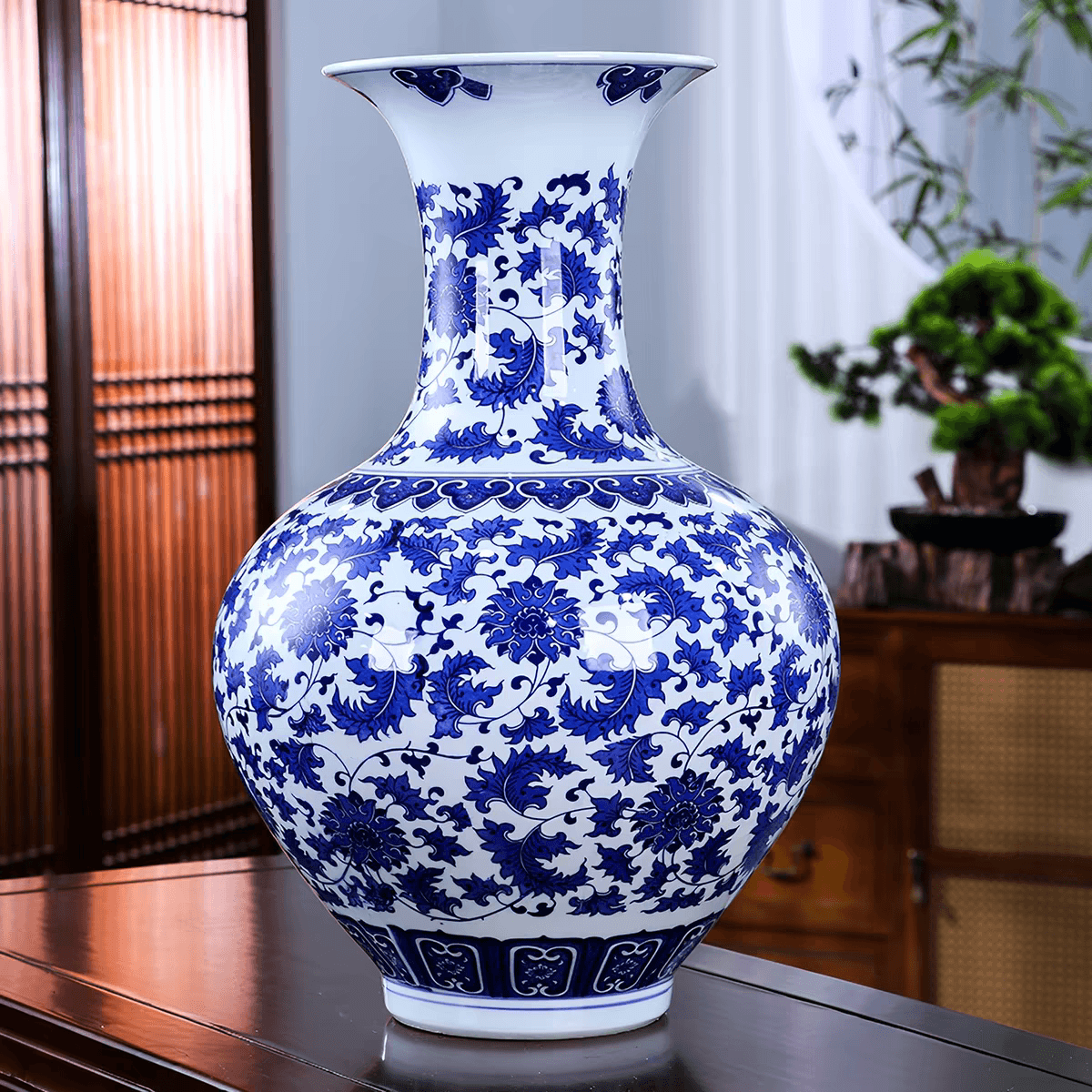
Blue-and-white porcelain earns its "white gold" status through extreme scarcity and near-impossible craftsmanship. Yuan and Ming pieces have fetched record auction prices, and imperial kiln rules required defective pieces to be destroyed. Jingdezhen's 72-step handmade craft and cobalt pigments perfected its timeless beauty.
Do you know why blue-and-white porcelain is truly called "white gold"—and why it can fetch jaw-dropping prices like 230 million yuan? In 2005, the Yuan-dynasty blue-and-white jar Guiguzi Descending the Mountain sold at Christie's London for £15.688 million (about 230 million RMB). Converted at the gold price of the time, that was equivalent to 2 tons of gold—setting a record for Chinese art at auction. And the Nanjing Museum's prized Xiao He Chasing Han Xin Under the Moon meiping vase—one of only three surviving national-treasure pieces in the world—is valued by the trade at 700 million to 1 billion RMB.
Centuries ago, blue-and-white porcelain had already conquered all of Europe, becoming a prized collectible among royalty and aristocrats. In 1717, Augustus II the Strong, Elector of Saxony, traded 600 elite dragoons for 151 pieces of Jingdezhen blue-and-white porcelain—a collection still housed today in Dresden's Zwinger Palace. Blue-and-white even appears in the famous European painting The Feast of the Gods, where the deities hold blue-and-white vessels—proof enough of how precious it was in the Western world.
I. The Core of Blue-and-White's Priceless Value: Extreme Scarcity and Near-Impossibility to Replicate
1. Extreme Scarcity: The Imperial Rule of "Defective Pieces Must Be Destroyed"
After the Ming dynasty established the imperial kilns, it laid down a strict rule: "defective pieces must be smashed, never allowed to leave." If a piece had even the slightest flaw, it was shattered on the spot and buried—never permitted to reach the public. This rigorous quality control means that very few imperial-kiln blue-and-white masterpieces survive today; each one is effectively unique.
2. Near-Impossible to Replicate: The 72-Step Traditional Craft
Authentic blue-and-white porcelain is an underglaze-color technique: the pattern is painted by hand first, then covered with a layer of clear glaze and fired once at 1300°C—the finished piece will never fade, even after a thousand years. The entire process involves 72 handcrafted steps. In ancient times, kiln temperature was controlled purely by the artisan's experience; the slightest deviation in temperature could ruin an entire batch. Hence the old saying, "nine out of ten kilns fail"—the success rate was extremely low. Every flawless piece of blue-and-white porcelain is therefore the crystallization of an artisan's consummate skill.
II. Jingdezhen: The Hometown of Blue-and-White Porcelain
Yuan-dynasty artisans pioneered a two-component formula of porcelain stone plus Machang clay, solving the problem of large pieces warping and laying the foundation for blue-and-white's development. Combined with the thriving maritime trade of the Yuan era, cobalt ore (sumali qing) from West Asia reached Jingdezhen. The blue fired from this pigment was rich and vivid, and it naturally diffused like an ink wash painting—perfecting the beauty of blue-and-white.
After the Ming dynasty established its imperial kilns, Zheng He's fleet brought back the finest cobalt pigment, sumali qing, from the Persian Gulf and East Africa, pushing blue-and-white craftsmanship to its historical peak. It became an exclusive treasure of the imperial court—and a smash hit in overseas markets.
III. Behind the Sky-High Prices: 700 Years of Chinese Romance
The astronomical prices of blue-and-white porcelain have never been about the value of the clay itself. They reflect the traditional craftsmanship upheld by generations of artisans—and a Chinese romance that has flowed for 700 years. From the pioneering formulas of the Yuan dynasty to the craft's peak in the Ming, and on to the kiln fires still burning in Jingdezhen today, blue-and-white porcelain is far more than a simple ceramic—it is a calling card of Chinese culture.
If you'd like to learn more about the history and craftsmanship of blue-and-white porcelain, stay tuned to our blog for more in-depth explorations of Chinese aesthetics.
Related guides
· Buying Guide
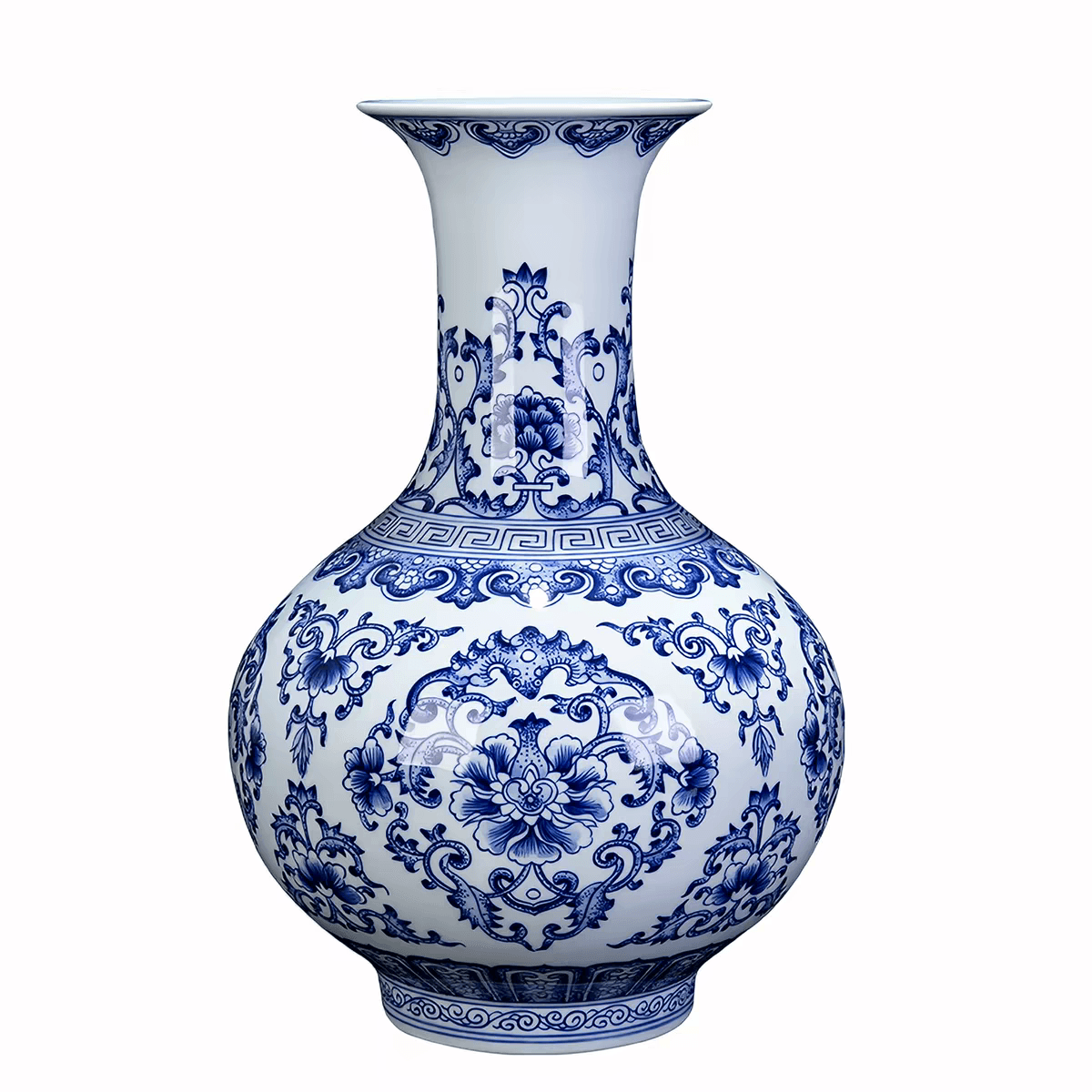
Jingdezhen World Heritage bid: the world's first heritage site protecting an entire production line
Jingdezhen’s World Heritage inscription protects its entire handmade porcelain production chain, not a single site. The city’s two-thousand-year success stems from market demand, complete industrial clustering, and continuous artisan training.
Read more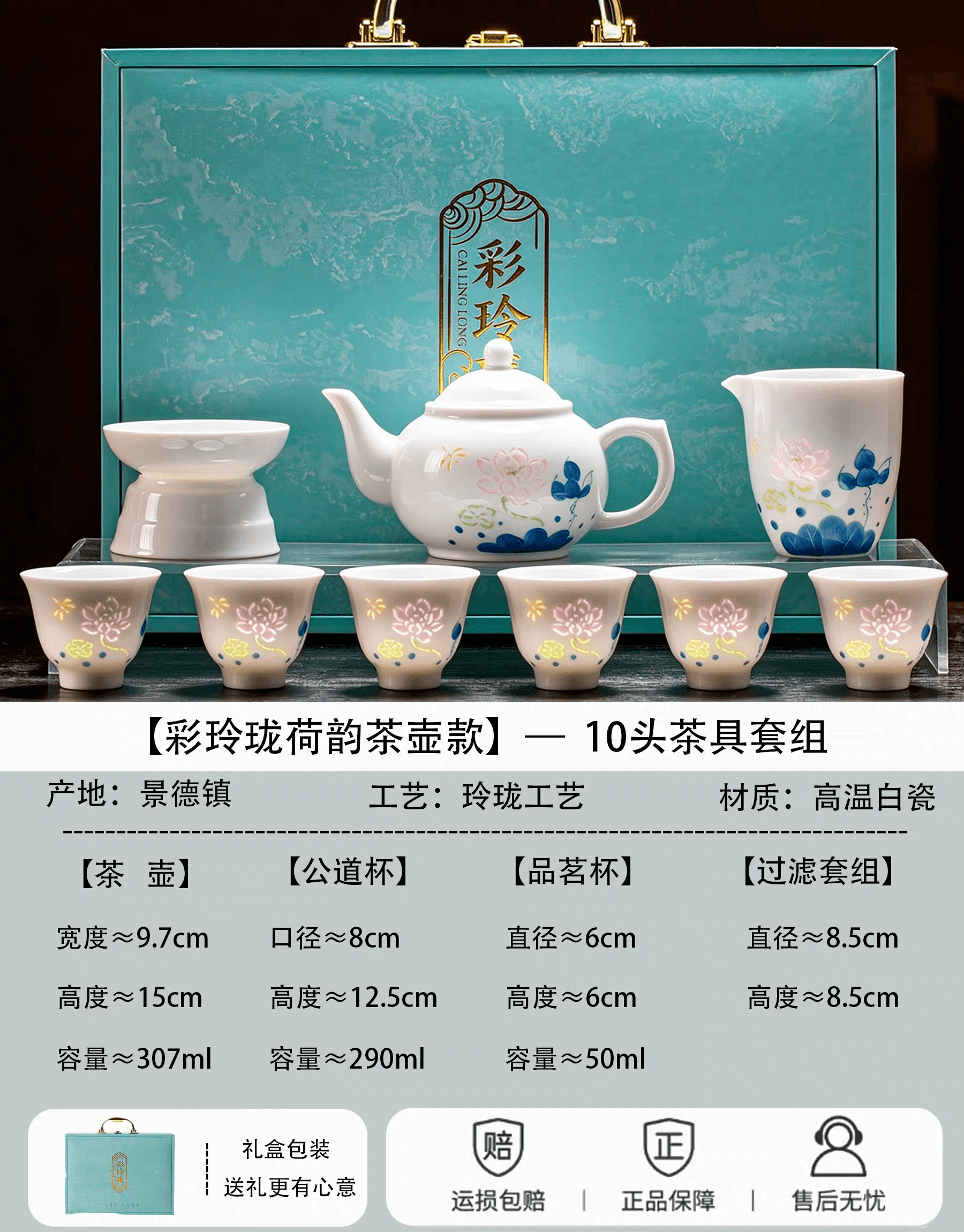
· Buying Guide
Linglong Porcelain: From Accident to an Imperial-Kiln Legend of Starlight
{"摘要":"Linglong porcelain began with a kiln accident in the Song Dynasty. Through meticulous steps like trimming, carving, and glaze filling, light passes through the body yet not a drop of water leaks—making it one of Jingdezhen’s four great porcelains, embodying imperial-kiln craftsmanship and Eastern romance."}
Read more· Buying Guide
How to Choose a Ceramic Vase for Your Home
When choosing a ceramic vase for your home, avoid cheap low-fired mass-market pieces and look for fine porcelain made from kaolin fired at 1380°C. Choose the height based on where you'll place it, favor stable shapes, match the glaze color to your home decor style, and check that the base sits flat when you inspect it.
Read more