{"Summary":"Jingdezhen's four great famous porcelains—blue and white, linglong (rice-grain), famille rose, and colored glaze—each have their own craft characteristics and aesthetic language, carrying a thousand years of porcelain-making craftsmanship and offering a reference for Chinese ceramics for collecting, display, and everyday use."}
The Four Great Porcelains of Jingdezhen: Blue-and-White, Linglong, Famille Rose, and Color Glaze—Understanding Eastern Ceramic Aesthetics
Meta description: Take a closer look at Jingdezhen's four great porcelains—blue-and-white, linglong, famille rose, and color glaze—what makes each one distinctive. Experience a thousand years of porcelain craftsmanship and find the Chinese ceramic piece that's right for you.
Introduction
When it comes to Chinese ceramics, Jingdezhen is impossible to overlook. A thousand years of kiln fire have forged four great porcelains: blue-and-white, linglong, famille rose, and color glaze. Understand them, and you'll understand the unique charm of Chinese porcelain—whether you're collecting, decorating your home, or choosing a tea set as a gift, they're all excellent references.
Blue-and-White
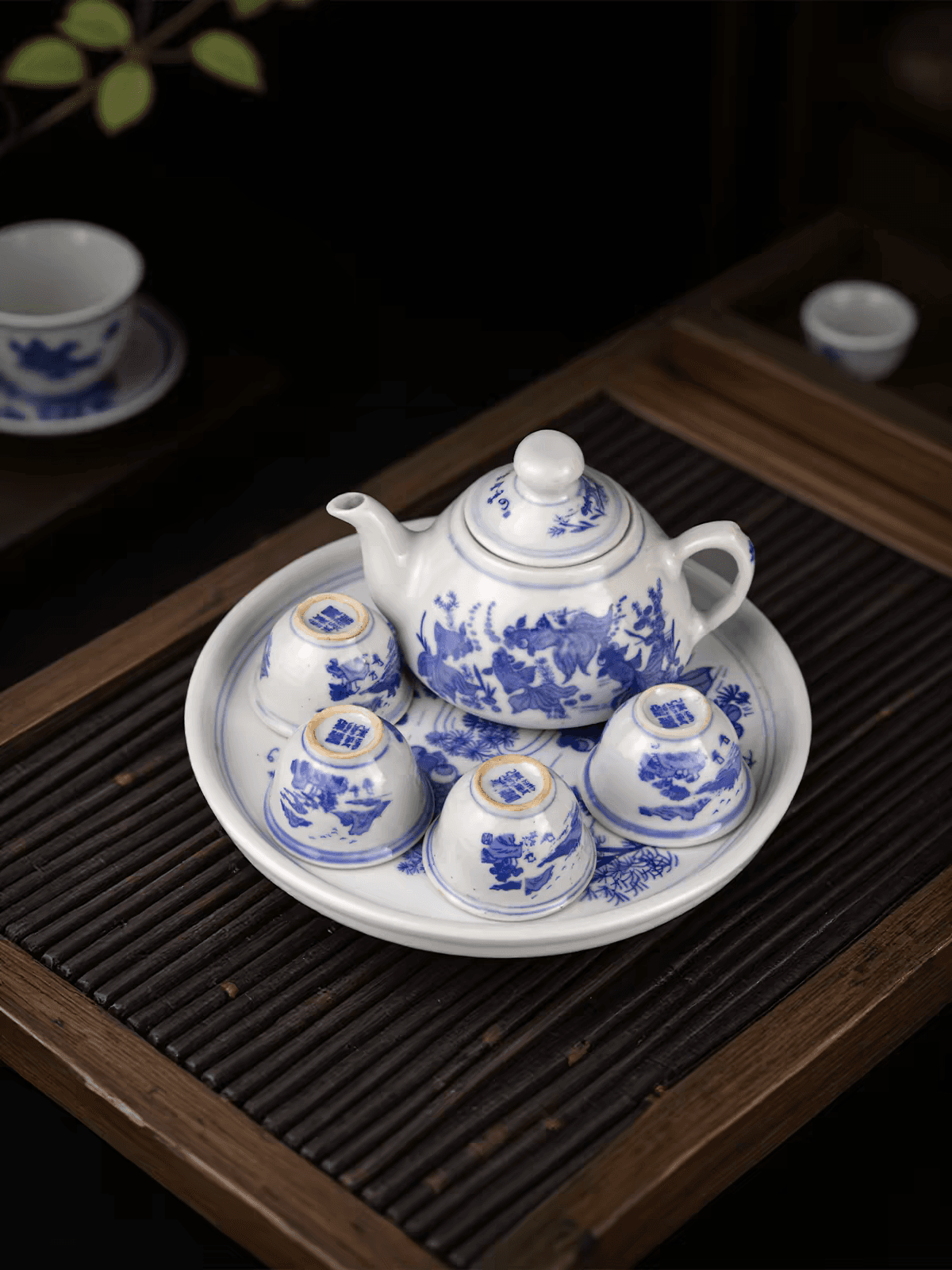
Blue-and-white uses cobalt as ink and the white porcelain body as rice paper. Patterns are painted on, then covered with a layer of transparent glaze and fired once at high temperature.
Early primitive blue-and-white was rough, with dull coloration. In the Yuan dynasty, Jingdezhen artisans found high-quality cobalt and mastered stable high-temperature firing techniques, and blue-and-white thus became a porcelain classic. Veteran craftsmen control the intensity of the cobalt, creating rich layers; after firing, the patterns look like ink naturally diffusing on rice paper, with a interplay of solid and void.
Fine blue-and-white has a restrained character; the cobalt and the body glaze merge into one, the glaze surface is warm as jade, dense areas aren't muddy, and pale areas don't float. The blue sinks deep into the body, and after long years it still looks beautiful in color.
Linglong
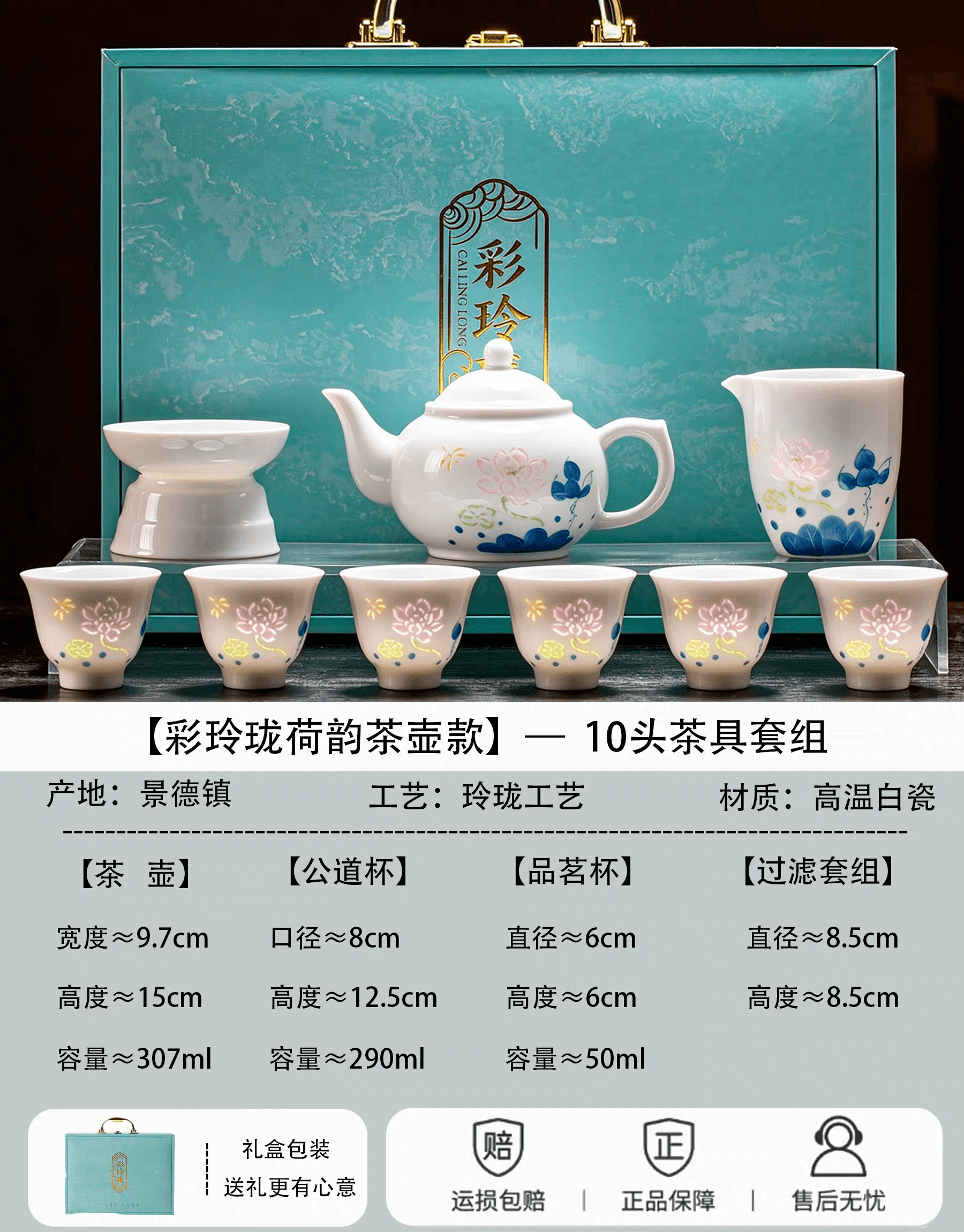
Linglong porcelain begins by carving rice-grain and petal-shaped openwork into the unfired body, then filling the holes with a specially made transparent glaze. After high-temperature firing, the openwork areas are translucent and let light through, yet the glaze surface is flat and smooth—hence the name "linglong jade."
Early openwork porcelain left the holes exposed, with limited beauty. During the Yongle period of the Ming dynasty, artisans pioneered the glaze-filling technique, preserving the translucent, lively feel while keeping the glaze surface intact—opening up a light-and-shadow aesthetic in porcelain that later gave rise to the classic blue-and-white linglong porcelain.
Linglong greatly tests carving and glazing skills: the openwork must be delicate without damaging the body; filling the glaze demands strict precision—too thin and too much light passes through, too thick and the holes are clogged. Only when the shrinkage rates of body and glaze match does the finished piece resist cracking and warping.
Superior linglong excels in light and shadow: light passes through the porcelain body, hazy and elegant, the glaze smooth and comfortable to the touch.
Famille Rose
Famille rose is an overglaze enamel. Lines are outlined on white porcelain, a glass-white base containing arsenic is applied, colored enamels are layered and shaded, and it's fired a second time at low temperature. The colors are rich and soft, excelling at warm tones like pink, pale green, and goose yellow—vivid without being gaudy. Floral, bird, landscape, and figure decorations are abundant, earning it the reputation of "Eastern oil painting."
Famille rose sprouted in the late Kangxi period and matured under Yongzheng. The core lies in shading technique and temperature control: the enamels are fine and pure, and color transitions are controlled by hand to create light-and-dark layers. A slight deviation in kiln temperature and the finished piece suffers greatly.
Good famille rose has a lively sense of layering—colors aren't stiff blocks, and petal decorations have natural gradients. In hand you can feel the delicate, built-up texture of the enamels, with crisp lines that look remarkably true to life.
Color Glaze
Color glaze doesn't rely on elaborate decoration—a single glaze color alone wins hearts. Metal oxides are used as colorants, applied to the porcelain body surface, and fired at high temperature in reduction or oxidation to form a pure, lustrous monochrome glaze.
The glaze formula, kiln atmosphere, and subtle variations in kiln temperature all make the final coloration entirely different. Sacrificial Red is a treasure of a thousand kilns, and Langyao Red with its "spit-mouth, dripping-foot" effect—both are rare pieces born from artisans' contest with the kiln fire.
Monochrome glaze has a long history: celadon and white porcelain took shape in the Northern and Southern Dynasties, and Song dynasty shadow-blue celadon elevated the beauty of monochrome glaze. In the Xuande period of the Ming dynasty, high-temperature red glaze and sacrificial blue glaze firing techniques matured; during the Kangxi, Yongzheng, and Qianlong periods, color glaze varieties reached their peak.
When appreciating color glaze, focus on texture: the glaze color should be pure and full, with few stray spots. Naturally flowing glaze trails and crackle patterns are not flaws—they are one-of-a-kind natural marks. Sacrificial Red is deep and weighty as a gem, Langyao Red is bright, and Sacrificial Blue is calm—each piece is irreproducible.
The four great porcelains carry the craftsmanship of a thousand years of porcelain makers and hold the aesthetic unique to the Chinese people. Each type of porcelain has its own distinctive language. Whether for daily tea drinking, home decoration, or choosing a souvenir gift, Chinese ceramics can add elegance to life.
Related guides
· Buying Guide
Linglong Porcelain: From Accident to an Imperial-Kiln Legend of Starlight
{"摘要":"Linglong porcelain began with a kiln accident in the Song Dynasty. Through meticulous steps like trimming, carving, and glaze filling, light passes through the body yet not a drop of water leaks—making it one of Jingdezhen’s four great porcelains, embodying imperial-kiln craftsmanship and Eastern romance."}
Read more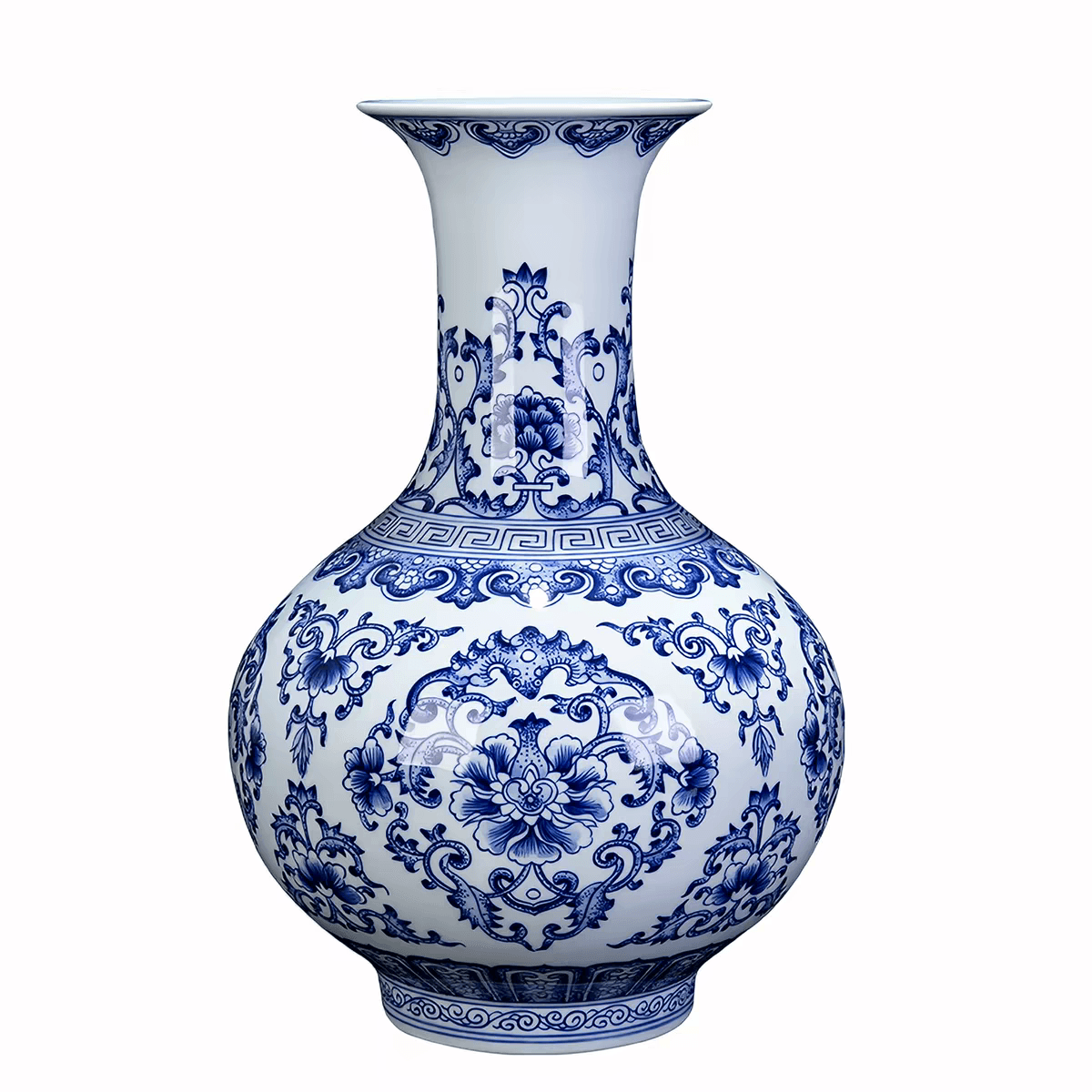
· Buying Guide
How to Choose a Ceramic Vase for Your Home
When choosing a ceramic vase for your home, avoid cheap low-fired mass-market pieces and look for fine porcelain made from kaolin fired at 1380°C. Choose the height based on where you'll place it, favor stable shapes, match the glaze color to your home decor style, and check that the base sits flat when you inspect it.
Read more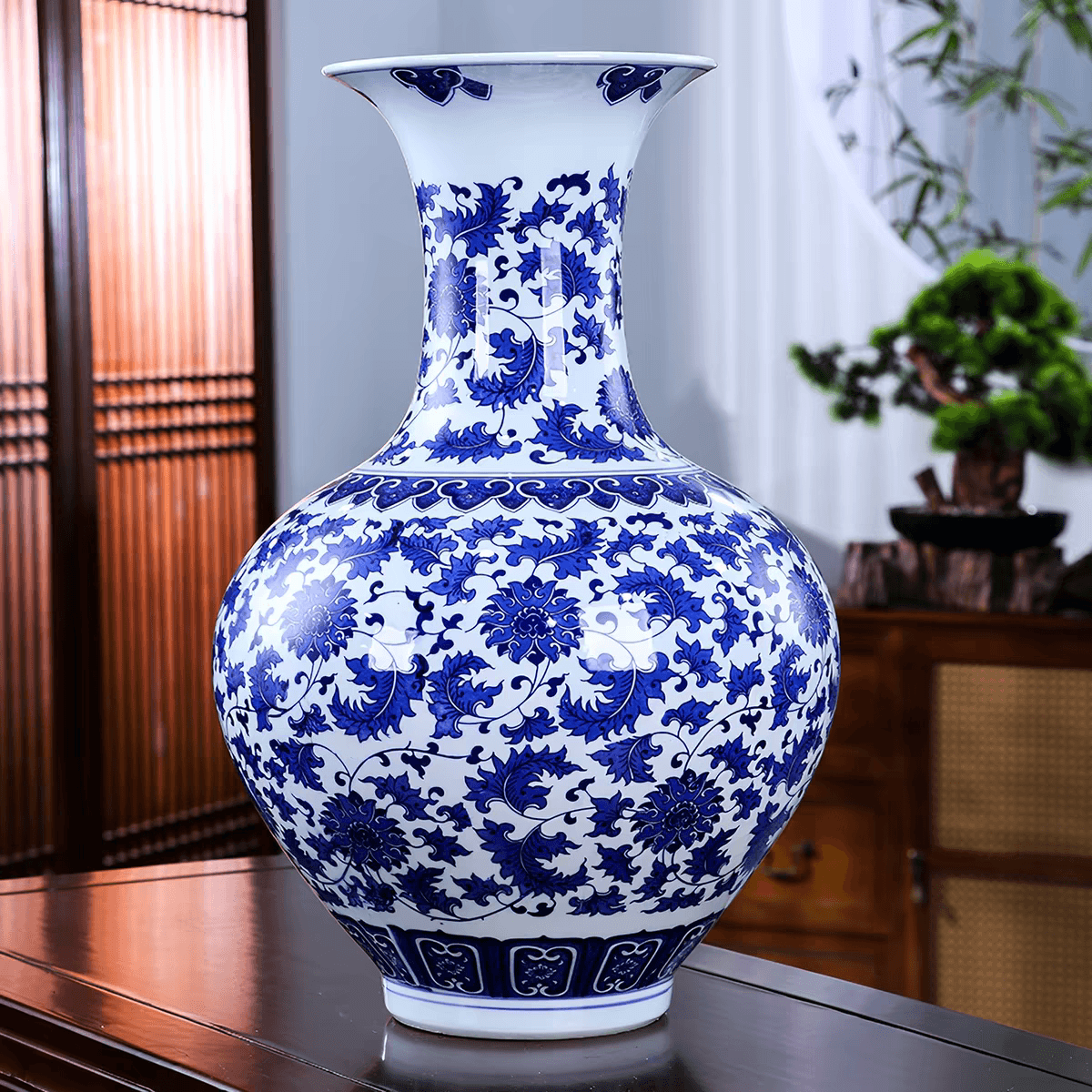
Why Is Blue-and-White Porcelain “Worth Its Weight in Gold”?
Blue-and-white porcelain earns its "white gold" status through extreme scarcity and near-impossible craftsmanship. Yuan and Ming pieces have fetched record auction prices, and imperial kiln rules required defective pieces to be destroyed. Jingdezhen's 72-step handmade craft and cobalt pigments perfected its timeless beauty.
Read more